
What Is On-Page SEO?
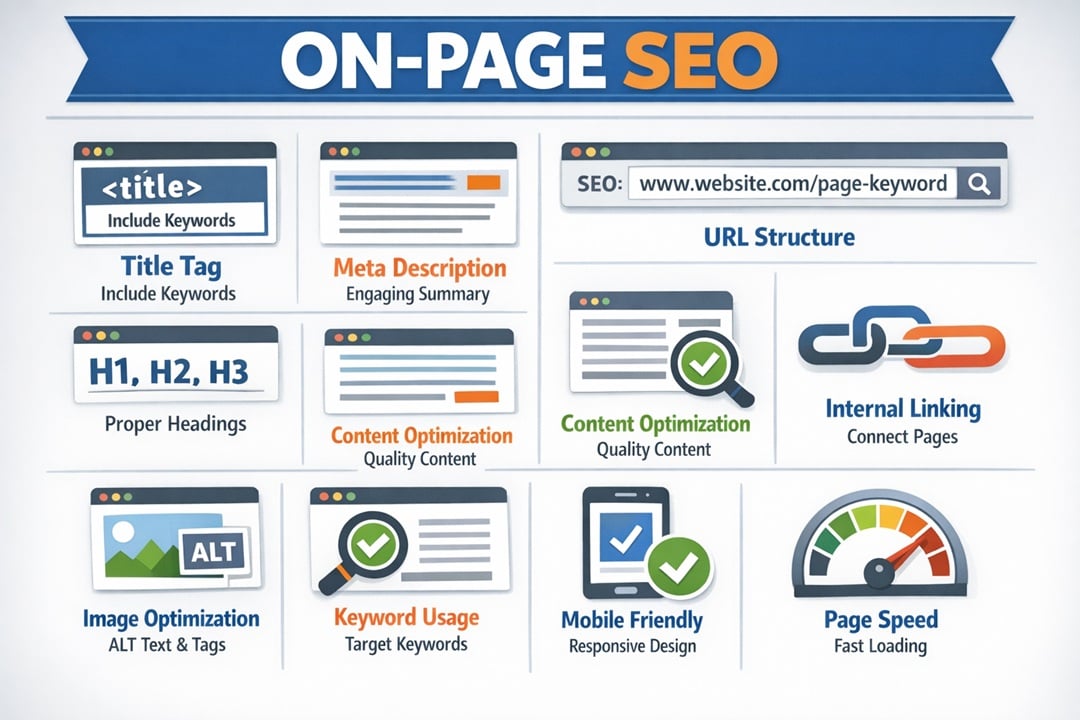
All the work done inside a website so that Google understands what the page is about and people can read and understand it easily is called On-page SEO.
For example:
Writing good and easy content
Using headings in the right way
Adding a title and meta description
Optimizing images properly
Below, we will learn some easy ways to make your website better using on-page SEO.
Why Is On-Page SEO Important?
On-page SEO is important because it helps search engines understand what your page is about. Search engines look at words, titles, and other page elements to see if the page matches what people are searching for.
When a page is useful and easy to read, Google shows it to users. Google often changes its rules, but one thing stays the same—good user experience is very important.
Google likes “people-first content.” This means content should be helpful, clear, and written for people, not just for search engines.
Next, we will learn how to update your content using good on-page SEO practices.
Pro Tip
You can use an On-Page SEO Checker to find easy and helpful ideas to improve your website. It shows what to fix so your pages can work better on Google.
Write Helpful and Unique Content
Helpful and unique content means writing in your own words and sharing useful information. The content should be easy to read and understand. When people enjoy reading your content, they stay longer on your page. Google also likes helpful content because it gives the right answers to users. Good content helps both people and search engines.
Use the Right Target Keywords
Target keywords are the main words people search on Google. Use these words naturally in your content. Do not use them too many times. Place keywords in the title, headings, and text. This helps Google understand what your page is about and show it to the right people.
Write Clear Keyword Rich Titles
Title tags are the first thing people see on Google. A good title should be clear and include important keywords. It should tell users what the page is about. Short and simple titles work best. A strong title helps people click your page and helps Google rank it better.
Write Click Worthy Meta Descriptions
Meta descriptions are short texts shown under the title on Google. They should explain what the page is about in simple words. A good meta description makes people want to click the page. Even though it does not affect ranking much, it helps get more visitors.
Use Clear Headings and Subheadings
Headings and subheadings help organize your content. They make the page easy to read. People can quickly find what they need. Headings also help Google understand the structure of your page. Using clear headings improves both user experience and SEO.
Create Short and Simple URLs
A good URL should be short and easy to read. It should tell what the page is about. Avoid using long numbers or symbols. Simple URLs are better for users and search engines. They are easier to remember and look cleaner on Google search results.
Link Pages Within Your Website
Internal linking means linking one page of your website to another. This helps users find more helpful information. It also helps Google crawl your site easily. Good internal links improve page value and keep visitors on your website longer.
Link to Trusted External Websites
External links point to other trusted websites. They help give extra information to users. Linking to good websites shows Google that your content is helpful and well-researched. Do not link to bad or spammy sites. Always choose trusted sources.
Use and Optimize Images Properly
Images make content more interesting and easy to understand. Use clear and good-quality images. Optimize images by reducing file size so pages load faster. Always add image alt text. This helps Google understand the image and improves SEO.
Keep Users Interested on Pages
User engagement means keeping visitors active on your page. Write simple content, use images, and add links. When users stay longer and read more, Google sees your page as useful. Good engagement helps improve rankings and user experience.
Make Your Website Load Faster
Page speed is very important for SEO. People do not like slow websites. A fast website keeps users happy. Use optimized images, clean design, and good hosting. Google prefers fast-loading pages and ranks them higher.
Write Clear Answers for Google
Clear answers help Google show your content in featured snippets. Use simple language and short sentences. Answer common questions directly. This makes it easier for Google to understand and show your content at the top of search results.
Help Search Engines Understand Content
Schema markup helps search engines understand your content better. It is a special code added to a webpage. Schema can show rich results like stars or FAQs. This improves visibility and helps users trust your page more.
Conclusion
On-page SEO is very important for every website. It helps Google understand what your page is about and helps people read your content easily. When you use helpful content, the right keywords, clear titles, and good images, your website works better on Google.
Small steps like using headings, fast page speed, and good links help a lot. When people enjoy using your website, Google likes it too. By following on-page SEO steps, your website can get more visitors in 2026 and the future.